Perfect B, Doral FL. | 05.12.26 | 8 min read.
This post is for educational purposes only and does not substitute for personalized medical or dermatological advice. If you have active skin conditions, consult a licensed provider before starting new topical ingredients. For the bigger picture, read how acne treatment options are combined at Perfect B in Doral into a realistic, staged plan for clearer skin.
What Is Niacinamide, and Why Is It in Almost Every Skincare Product Right Now?
Niacinamide is a water-soluble form of vitamin B3 (nicotinamide) that has become one of the most studied and most recommended ingredients in dermatology and medical aesthetics over the past decade. Its popularity is not a marketing trend. The clinical evidence base for niacinamide is unusually broad, it addresses multiple distinct skin concerns through different biological mechanisms, it is stable in formulation, it is compatible with most other active ingredients, and it is well tolerated across virtually all skin types. At Perfect B in Doral, FL, we recommend it regularly as a foundational ingredient for patients managing acne, hyperpigmentation, and aging concerns, often in combination with clinical treatments.
This post covers what niacinamide actually does at the cellular level, which skin concerns have the strongest evidence behind them, and why niacinamide is particularly relevant for South Florida patients dealing with post-inflammatory hyperpigmentation.
Key Takeaways
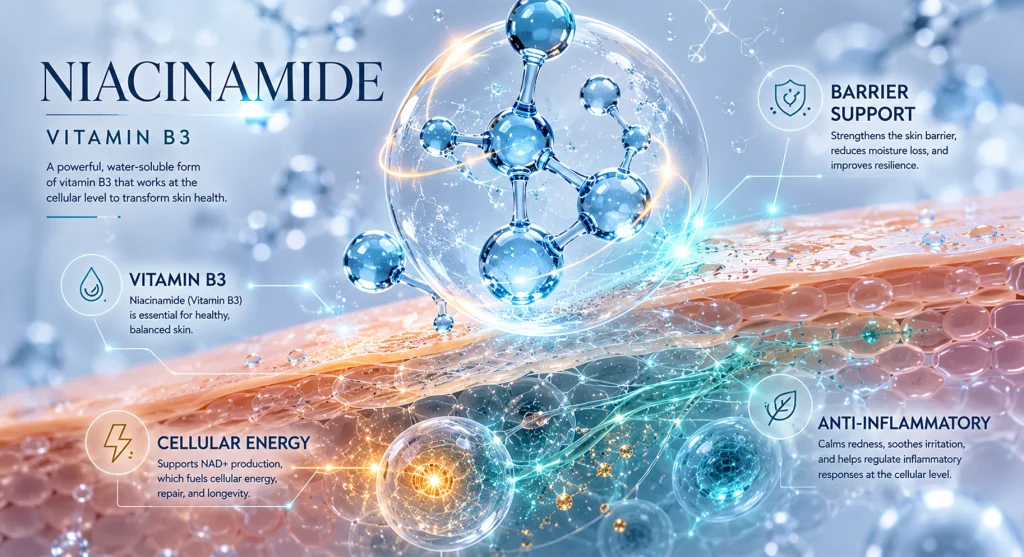
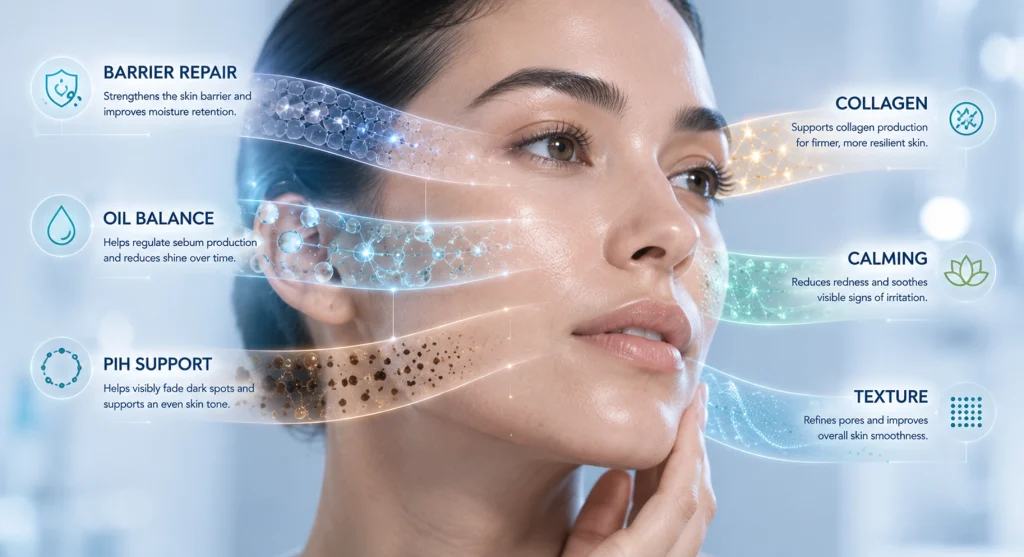
- Niacinamide (vitamin B3) has six clinically validated topical benefits, skin barrier support, pore minimization, oil regulation, anti-inflammatory effects, dark spot reduction, and anti-aging, each operating through a distinct biological pathway.
- The NAD+ connection explains niacinamide’s deeper effects. As a precursor to NAD+, niacinamide participates in DNA repair and cellular energy regulation, which is why its effects go beyond what a typical topical ingredient produces.
- For South Florida patients, the dark spot benefit is particularly significant. Fitzpatrick IV-VI skin types, common in Miami’s Hispanic and Caribbean population, are more prone to post-inflammatory hyperpigmentation. Niacinamide is the most well-tolerated first-line ingredient for PIH management in these skin types.
- Niacinamide and tretinoin are highly complementary, not redundant. Niacinamide’s anti-inflammatory and barrier-strengthening properties directly offset the irritation that tretinoin commonly causes.
- 5% is the clinical sweet spot for most patients. Higher concentrations (10%) increase efficacy for dark spots and oil control but may cause flushing or mild irritation in sensitive skin.
How Niacinamide Works: The Mechanism Behind the Benefits
Most skincare ingredient discussions skip the mechanism and go straight to the benefit list. That approach makes it difficult to understand why niacinamide’s effects are real and why they persist. The foundational mechanism is straightforward: niacinamide is converted inside skin cells into coenzymes that are essential for hundreds of enzymatic reactions, including DNA repair, energy metabolism, and the regulation of inflammatory signaling. This is why niacinamide does not work the same way as a simple anti-oxidant or humectant, it is metabolically active inside the cell.
The NAD+ precursor pathway
One of the most important aspects of niacinamide’s mechanism, and one that almost no skincare brand discusses, is its role as a precursor to NAD+ (nicotinamide adenine dinucleotide). NAD+ is a coenzyme involved in cellular energy production, DNA repair, and the activation of sirtuins, proteins associated with longevity and cellular stress resistance. Niacinamide enters the Preiss-Handler and salvage pathways to produce NAD+, which means topical application of niacinamide has effects that extend beyond the surface layer. This NAD+ connection explains why niacinamide has documented anti-aging effects at the cellular level, not just cosmetically. A 2024 peer-reviewed study published in PMC with 118 citations documenting the mechanistic pathways through which niacinamide exerts its multiple functions in skin biology, including NAD+ precursor activity, anti-inflammatory enzyme regulation, and melanogenesis inhibition is the most comprehensive recent summary of these pathways available in the published literature.
The 6 Clinically Validated Benefits of Niacinamide for Skin
1. Skin barrier strength and hydration
The skin barrier depends on ceramides, fatty acids, and cholesterol to maintain structure and prevent transepidermal water loss. Niacinamide stimulates the production of ceramides and other barrier lipids, reducing water loss and improving the skin’s ability to stay hydrated. This is measurable in clinical studies as a reduction in transepidermal water loss (TEWL). For patients with compromised barriers, whether from acne treatments, chemical peels, or laser procedures at our Doral clinic, niacinamide is one of the most effective ingredients for accelerating recovery.
2. Pore minimization and sebum regulation
Niacinamide does not physically shrink pores, which is anatomically impossible for a topical ingredient. What it does is regulate sebaceous gland activity, reducing the volume of sebum that dilates pore openings. In patients with oily or combination skin, consistent niacinamide use produces a visible reduction in pore prominence over 8 to 12 weeks. This is particularly relevant in South Florida where heat and humidity increase sebum production year-round.
3. Anti-inflammatory effects for acne-prone skin
Niacinamide inhibits multiple pro-inflammatory cytokines, reducing the inflammatory response that drives papule and pustule formation in acne. While it is not a primary acne treatment, it is an effective adjunct that reduces overall skin reactivity and calms active lesions. For patients using prescription acne treatments, niacinamide reduces the irritation those treatments cause while adding its own anti-inflammatory benefit. → See Perfect B’s comprehensive acne treatment plan in Doral, FL, including how we combine clinical protocols with evidence-based skincare ingredients for patients who need more than topicals alone.
4. Dark spot reduction and PIH, the strongest clinical evidence
A clinical study published in the Journal of Clinical and Aesthetic Dermatology demonstrating that topical niacinamide significantly reduces hyperpigmentation, yellowing, and skin blotchiness compared to vehicle control over 12 weeks of consistent use is one of the foundational papers on this benefit. This is where niacinamide has the most consistent clinical evidence. Niacinamide inhibits the transfer of melanosomes (melanin-containing vesicles) from melanocytes to keratinocytes. Reduced melanosome transfer means less melanin accumulates in the surface layers of the skin, producing visible lightening of dark spots, post-inflammatory hyperpigmentation, and uneven tone. Unlike hydroquinone or kojic acid, niacinamide achieves this without significant irritation risk, making it suitable for continuous, long-term use. Clinical studies show measurable improvement in hyperpigmentation after 8 to 12 weeks of consistent use at 5% concentration.
5. Anti-aging and collagen support
Niacinamide stimulates collagen synthesis in dermal fibroblasts, contributing to improved skin firmness, elasticity, and reduction in fine lines over time. The anti-oxidant properties of niacinamide also reduce oxidative stress from UV exposure and environmental pollution, which is a primary driver of photoaging. The anti-aging effect is not as potent as tretinoin, but it operates through a complementary mechanism and without tretinoin’s side effect profile, making it a sustainable daily option.
6. Rosacea and sensitive skin calming
Niacinamide’s anti-inflammatory mechanism is effective for rosacea-prone skin, reducing redness and reactivity over time. Unlike many active ingredients, niacinamide does not trigger rosacea flares and can be safely incorporated into routines for patients managing chronic redness. For sensitive skin types that cannot tolerate retinoids, exfoliants, or vitamin C, niacinamide is often the most effective option available for improving skin tone and texture without provocation.
Niacinamide for Hyperpigmentation in South Florida: Why This Ingredient Matters Here Specifically
Post-inflammatory hyperpigmentation, the dark marks that remain after acne, inflammation, or any skin trauma, is more pronounced and more persistent in Fitzpatrick IV, V, and VI skin types than in lighter skin tones. This demographic makes up a significant proportion of Perfect B’s patient population in Doral and the broader Miami area, where the Hispanic, Caribbean, and Afro-Latino communities are dominant. For these patients, managing PIH requires ingredients that are both effective and safe for long-term daily use, because aggressive treatments like high-percentage hydroquinone or acid peels can cause further pigmentation changes if used incorrectly on darker skin.
Niacinamide fills this clinical gap effectively. It works through the melanosome transfer inhibition pathway rather than by suppressing melanin production globally (which carries rebound risk), and it does so without the irritation that increases PIH risk. Combined with consistent broad-spectrum SPF use, which is critical in South Florida’s year-round UV environment, niacinamide is a sustainable daily strategy for managing the hyperpigmentation that commonly follows acne breakouts in our patient population. → See how Perfect B treats hyperpigmentation in Miami with a combination of clinical procedures and evidence-based topical protocols tailored to South Florida skin types.
Niacinamide and Tretinoin: Why the Combination Works Better Than Either Alone
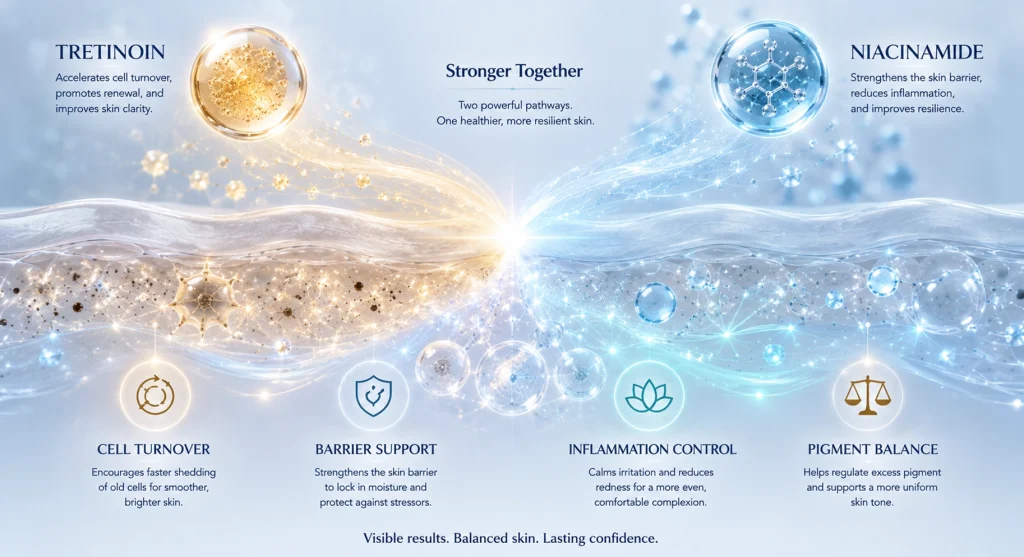
Tretinoin is one of the most effective topical ingredients in dermatology for acne, aging, and hyperpigmentation, but it commonly causes dryness, irritation, peeling, and an initial purging phase that discourages many patients from continuing. Niacinamide directly addresses these side effects: its barrier-strengthening properties reduce the water loss that causes dryness, and its anti-inflammatory action calms the irritation and redness that tretinoin triggers, especially during the first four to eight weeks of use.
The combination is effective for hyperpigmentation in particular. Tretinoin increases cell turnover, bringing pigmented cells to the surface faster. Niacinamide prevents new melanin from being deposited as those cells turn over. The result is a faster and more complete resolution of dark spots than either ingredient produces alone. For patients at Perfect B on a tretinoin protocol, niacinamide is a standard recommendation as part of the supporting routine. → Read Perfect B’s clinical guide to tretinoin, retinol, and adapalene, including how to choose the right retinoid for your skin type and how to build a protocol around it.
Does Niacinamide Raise NAD Levels? What the Research Actually Shows
This is one of the more nuanced questions about niacinamide, and it matters because the answer connects topical skincare to systemic cellular function. The short answer is yes, niacinamide, whether applied topically or taken orally, enters metabolic pathways that produce NAD+ inside cells. Topical penetration into the dermis is limited compared to oral supplementation, but sufficient to contribute to local NAD+ synthesis in skin cells.
NAD+ is a coenzyme essential for DNA repair, mitochondrial energy production, and the activation of sirtuins, a class of proteins associated with cellular longevity and stress resistance. The depletion of NAD+ with age is one of the mechanisms through which skin loses its repair capacity and ages structurally. Niacinamide’s role as a NAD+ precursor is part of why its anti-aging effects are biologically real rather than cosmetic. This connection is also why niacinamide’s benefits overlap with, but do not duplicate, those of intravenous or oral NAD+ therapy. The systemic and cellular reach of IV NAD+ is substantially greater than what topical application can achieve, but the local skin benefit of daily niacinamide use is supported by the same underlying biochemistry. → Learn about Perfect B’s NAD+ treatment plan in Doral, FL, and how systemic NAD+ therapy differs from topical niacinamide for patients interested in cellular repair and longevity outcomes.
Concentration, Timing, and Layering: How to Use Niacinamide Correctly
What each concentration does
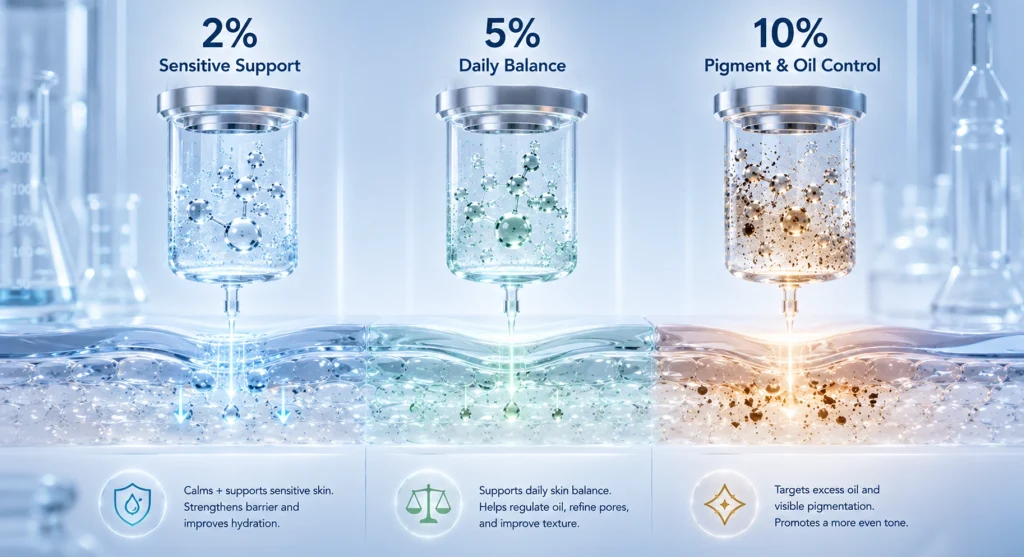
- 2% niacinamide: Effective for barrier support, hydration, and calming sensitive or reactive skin. Appropriate as a starting point for sensitive patients or those combining with other actives.
- 5% niacinamide: The clinical sweet spot for most patients. Provides meaningful effects across all six benefit categories, barrier, pores, inflammation, dark spots, aging, and redness, with very low side effect risk. This is the concentration used in most published clinical trials.
- 10% niacinamide: The strongest OTC concentration. More effective for dark spots, oil regulation, and anti-aging, but more likely to cause flushing or mild irritation in sensitive skin. Not necessary for all patients. If irritation occurs, reducing to 5% resolves it without losing the core benefits.
Morning, night, or both?
Niacinamide can be used both morning and night without issue. It does not cause photosensitivity, so morning use under SPF is safe. For patients using tretinoin at night, applying niacinamide before or after tretinoin helps buffer the irritation response. For maximum effect on hyperpigmentation, twice-daily use is preferred. If only one application is possible, either morning or night works, consistency matters more than timing.
The vitamin C compatibility myth
The concern that niacinamide and vitamin C cannot be combined is based on outdated research showing that niacin (a different form of vitamin B3, not niacinamide) and ascorbic acid can form nicotinic acid at high temperatures. Modern formulations at room temperature and standard concentrations do not produce this reaction in clinically significant amounts. Both ingredients can be used in the same routine. If preferred, layering vitamin C in the morning and niacinamide at night allows each to work without dilution, but mixing them in the same step is not problematic.
Who Should and Should Not Use Niacinamide
Niacinamide is appropriate for virtually all skin types, including sensitive, oily, combination, and dry skin. It is safe during post-procedure recovery (after peels, laser, or microneedling) once the treated skin has re-epithelialized. It is compatible with most other actives including retinoids, AHAs, BHAs, peptides, and SPF. The primary group for whom extra caution is warranted is patients with known niacin sensitivity, who may experience flushing from topical niacinamide at higher concentrations. This is rare but worth noting.
Patients who are pregnant or breastfeeding can use topical niacinamide safely at standard concentrations. Oral niacinamide supplementation in those populations should be discussed with a provider before starting. For patients with active rosacea or extremely compromised barriers, starting at 2% before increasing to 5% is advisable to establish tolerance before loading the skin with multiple actives simultaneously.
Frequently Asked Questions
1. What does niacinamide do for your skin?
Niacinamide (vitamin B3) works through multiple pathways: it strengthens the skin barrier by boosting ceramide production, regulates sebum and reduces pore appearance, calms inflammatory pathways relevant to acne and rosacea, inhibits melanin transfer to fade dark spots and PIH, and stimulates collagen synthesis for anti-aging effects. It is one of the most clinically versatile topical ingredients available without a prescription, and its safety profile makes it suitable for daily use across virtually all skin types.
2. Can you use niacinamide every day?
Yes. Niacinamide is well tolerated daily, both morning and night, at concentrations up to 10%. It does not cause photosensitivity, which means it can be used in the morning under SPF without concern. Sensitive skin types may start with lower concentrations (2-5%) and increase gradually. Side effects are uncommon and typically involve mild flushing or irritation at very high concentrations in sensitive individuals. Twice-daily use is preferred for maximum effect on hyperpigmentation and barrier repair.
3. Does niacinamide raise NAD levels?
Yes. Niacinamide is a precursor to NAD+ through the Preiss-Handler and salvage pathways. Topical penetration into the dermis provides some local NAD+ precursor activity, which contributes to DNA repair and anti-aging effects in skin cells. This is why niacinamide’s effects go beyond what a simple moisturizing or brightening ingredient produces. The systemic NAD+ benefit of IV or oral therapy is substantially greater than topical application, but the local skin biology follows the same biochemical logic.
4. Do I need niacinamide if I use tretinoin?
Not required, but highly complementary. Tretinoin is effective for acne, aging, and hyperpigmentation, but it commonly causes irritation, dryness, and initial purging. Niacinamide’s anti-inflammatory and barrier-strengthening properties directly counteract these side effects. Using niacinamide alongside tretinoin improves tolerability, supports the skin barrier, and enhances the combined result for dark spots and uneven tone. For patients on a tretinoin protocol at Perfect B, niacinamide is a standard supporting recommendation.
5. What percentage of niacinamide is most effective?
5% is the most broadly effective concentration for general use, with a strong evidence base across barrier, pore, pigmentation, and anti-inflammatory benefits. 10% concentrations produce stronger effects on dark spots and oil regulation but are more likely to cause irritation in sensitive skin. Concentrations below 2% offer mild barrier and calming benefits but limited pigmentation effect. For most patients, starting at 5% is the right choice. If using alongside other actives like retinoids or acids, 2-5% is safer during the adjustment period.
6. Is niacinamide good for darker skin tones?
Yes, and particularly so. Post-inflammatory hyperpigmentation is more pronounced in Fitzpatrick IV-VI skin types and more persistent. Niacinamide inhibits melanin transfer without the irritation risk of hydroquinone or aggressive acids, which is why it is the most suitable daily ingredient for PIH management in darker skin tones. In South Florida, where darker skin types are common in our patient population, niacinamide is one of the first ingredients we recommend for patients managing acne-related dark spots.
7. Can niacinamide be used with vitamin C?
Yes. The concern that niacinamide and vitamin C cannot be combined is outdated and based on a reaction that does not occur at modern formulation temperatures and concentrations. Both can be used in the same routine. If preferred, layering vitamin C in the morning and niacinamide at night allows each to work without dilution, but mixing them is not problematic. The combination is beneficial for hyperpigmentation, vitamin C inhibits melanin production while niacinamide inhibits melanin transfer, creating complementary effects on the same concern.
Closing: An Ingredient With Real Depth
Niacinamide’s position in modern skincare is earned, not marketed. The clinical evidence covers six distinct skin concerns, the mechanism extends to cellular biochemistry through the NAD+ pathway, and the safety profile allows daily use across nearly all skin types without restriction. For patients managing acne, hyperpigmentation, or aging skin in South Florida, particularly those in the demographic groups most affected by PIH, niacinamide is not an optional addition to a routine. It is a foundational ingredient.
At Perfect B in Doral, we incorporate it into supporting protocols for virtually every treatment category that involves the skin barrier or pigmentation. If you are building a skincare routine around a clinical concern, niacinamide should be in it. The question is which concentration, which timing, and which combination with other ingredients best fits your skin profile, and those decisions are worth reviewing with a provider who understands your specific skin history and treatment goals.
📍 Visit us at Perfect B, Doral FL
📞 Call or message us at (786) 502-2260